In short
AI belongs where a hotel's problem is attention: noticing, remembering and connecting the details of each stay across systems and shifts. It doesn't belong where the need is warmth, judgment or accountability, such as apologies, disputes and celebrations. Those should stay with people.
The hotel and its people are fictional. The situations are ones every hotel team will recognise.
The sales demo
The vendor's demo was polished. The chatbot would welcome every guest by name, suggest the spa at seven every evening, and ask for a review on checkout morning. It could answer questions in twelve languages.
Meera asked one question. "What would it have sent Ms. Iyer on her last morning?"
The vendor looked her up. Three nights, dinner in the restaurant twice, no spa. "A review request," he said. "And ten percent off the spa for her next visit."
Nobody spoke for a moment. Ms. Iyer was the guest who had spent a night beside a rattling air conditioner that nobody came to fix.
The real bottleneck in hospitality is attention
Ask any general manager what great service needs and you'll hear some version of the same answer: noticing. Remembering a guest is celebrating. Seeing that someone will land after the kitchen closes. Recalling that the last room had a noisy air conditioner.
Hotel teams are good at this when they have time. But attention is the first thing a busy shift takes away. Most talk about AI in hotels starts with automation. Meera didn't start with "what can AI automate?" She started with "where are we losing attention, and could software help us keep it?"
She walked through the guest journey, from booking to checkout, and asked two questions at each stage: where would AI help here, and where would it get in the way?
Where AI helps before the guest arrives
It helps by reading what the hotel already knows about each guest who's on the way (arrival time, requests, past stays, the occasion) and turning it into a short briefing for the team. It can also spot clashes early, like a late arrival on a night the kitchen closes at eleven. That alone would have saved Mr. Kapoor's evening in Chapter 1.
It gets in the way when it sends every guest the same automatic pre-arrival offer. Those messages are easy to set up and easy to ignore, and they teach guests that messages from the hotel are adverts.
Where AI helps during the stay
This is where an AI concierge for hotels earns its keep. It helps by getting each request to the right person with the details attached, answering routine questions (Wi-Fi, timings, directions) in the guest's own language at any hour, and flagging moments that need a person, like a request nobody has confirmed or a service about to close.
It gets in the way when it tries to handle an upset guest on its own. When something has gone wrong, the guest wants to know that a person understands and is responsible.
Where AI helps at checkout and after
It helps by spotting unresolved problems before checkout, while they can still be put right, and by handling the practical details: late checkout, luggage and transfers.
It gets in the way when it asks for a review from a guest whose stay went badly. If a system can't tell the difference, it shouldn't send the message. That was exactly the chatbot's mistake with Ms. Iyer.
What should always stay human
How Ms. Iyer's stay was saved
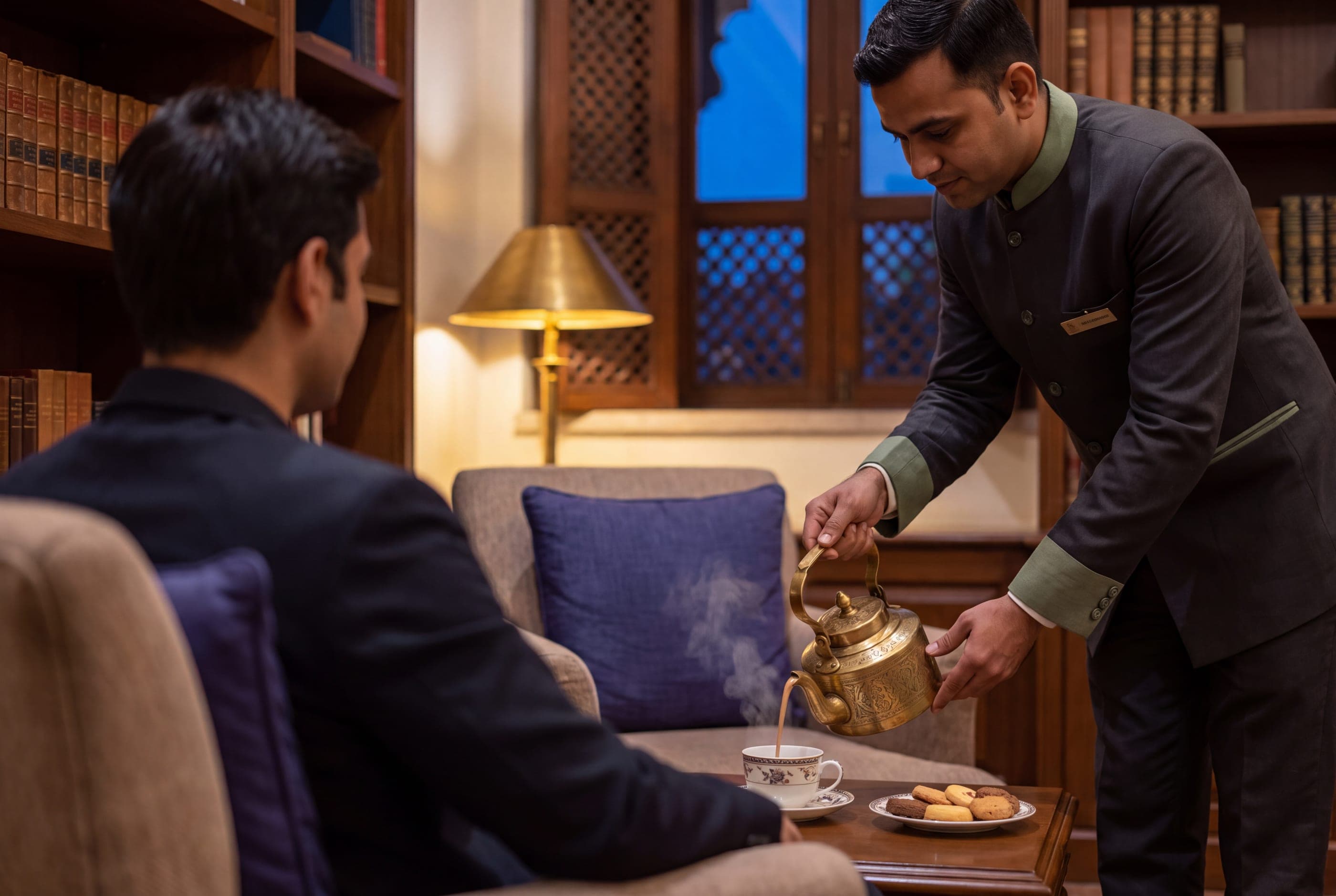
Ms. Iyer's story had a better ending than the chatbot knew. When her feedback card reached Meera, she sent Vikram, the duty manager, to find Ms. Iyer before breakfast. He apologised in person, poured her a cup of chai himself, and moved her to a quiet room for her last night.
She left a kind note. Not because anything was automated. Because a person took responsibility.
Some parts of hospitality should stay with people, however good the software gets:
- Apologies and service recovery. Taking responsibility only means something when a person does it.
- Celebrations and personal touches. AI can remind the team about an anniversary. The gesture itself should come from people.
- Money and disputes. Charges, refunds and disagreements need judgment and authority.
- Safety and wellbeing. Any sign that a guest may be unwell, unsafe or upset goes straight to a person.
Six questions to ask any AI tool for hotels
Meera turned all this into six questions for the next vendor who called:
- Which guest moment does it improve? "Engagement" isn't an answer. "Late arrivals get dinner arranged" is.
- Can my team see why it did something? Suggestions without reasons are hard to trust and harder to correct.
- Can a person overrule it, every time? The team should always have the last word.
- What does it do when it isn't sure? The right answer is to ask a person, not to guess.
- Does it know when to stay quiet? Look for limits on how often guests are contacted, and no offers while a problem is open.
- How is guest data handled? You should know what's stored, where, for how long, and who can see it.
How to pilot AI without putting guests at risk
Meera's advice to Mr. Sethi was the same for any hospitality AI: start small. Pick two or three clear guest moments. Run the tool alongside the team first, so it suggests and people decide, and you can judge its judgment before any guest sees it. Set a fixed period, and agree up front what success looks like.
It also helps to have the basics in place first. A clear guest-request workflow gives any tool something solid to plug into.
This is the view Quickgick is being built on: an AI-powered guest experience layer designed to understand each stay, notice the moments that matter and help hotel teams act at the right time, with the restraint to stay quiet when nothing useful needs saying. It's in private preview, and hotels can apply for the pilot.
The owner's office
Mr. Sethi read the six questions twice. Then he agreed to a pilot: two guest moments, suggestions only, eight weeks.
"One condition," he said. "At the end, I want to know if it worked. Properly. Not a feeling."
Meera had been waiting for that. Proving it is Chapter 4, the last chapter.
What Meera took away
- AI is most useful where the problem is attention: noticing and connecting the details of a stay.
- Apologies, celebrations, money and safety stay with people, however good the software gets.
- The test for any AI feature: would a guest notice it as better service, or as technology?
- Pilot small, with suggestions a person approves, before any guest sees an automated message.

Frequently asked questions
How is AI used in hotels?
The most useful uses keep the details of each stay together, route guest requests to the right person, answer routine questions at any hour, and flag moments that need a person's attention, such as a late arrival near the kitchen's closing time.
Will AI replace hotel staff?
It shouldn't. The strongest case for AI in hospitality is giving staff back the attention they lose on busy shifts, so they can spend it on guests. Apologies, celebrations, disputes and anything to do with wellbeing should stay with people.
What is an AI concierge for hotels?
An AI concierge helps a hotel understand and respond to guests during their stay, for example by answering questions, handling requests and noticing needs early, while passing anything that needs judgment or warmth to a member of the team.