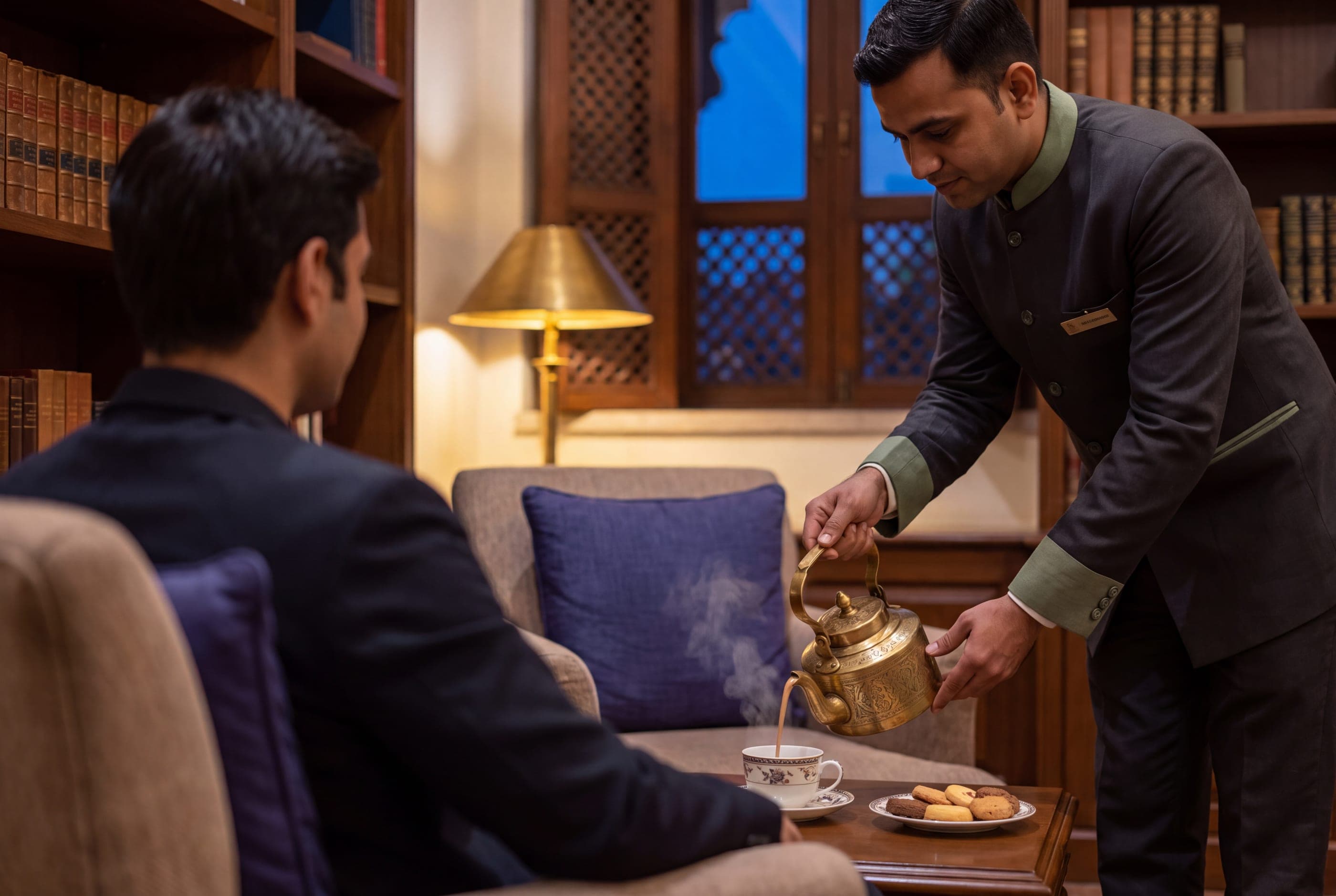

In short
Hotels can respond before a complaint by watching for a few predictable moments, like a late arrival near a kitchen's closing time, a request nobody has confirmed, or a promise with a deadline, and giving each one an owner who acts while help is still useful. The goal isn't more messages. It's fewer surprises.
The hotel and its people are fictional. The situations are ones every hotel team will recognise.
Front desk
Mr. Kapoor came through the doors at 11:10 PM with a laptop bag and the look of someone who had spent six hours in airports.
His flight from Bengaluru had been delayed twice. At 8:40 PM, stuck at the gate, he had updated his booking: arriving around 10:35 PM. He had done the sensible thing. He had told the hotel.
Arjun, on the night desk, checked him in with a warm smile. Then Mr. Kapoor asked the only question he really cared about. "Is the kitchen still open?"
It had closed at eleven. Arjun found a sandwich in the bar fridge and apologised twice. Mr. Kapoor said it was fine. It wasn't, quite.
The general manager's office
Meera Sharma, the hotel's general manager, reads every review on Monday mornings. Most weeks they are kind. This one had three stars.
Lovely hotel, friendly staff. But I told them I'd be late and still found the kitchen closed. It felt like nobody expected me.
It was the middle sentence that stayed with her. I told them.
She spent the morning working out what had happened. The new arrival time had reached the booking system at 8:40 PM, a screen nobody on the evening shift looks at. The kitchen's closing time was on a laminated card behind the desk. Arjun knew both facts. He just never had them in front of him at the same moment.
Nobody had done anything wrong, exactly. Everyone had done their job. The trouble was that it was nobody's job to notice.
Why most guest complaints are predictable
Mr. Kapoor's evening isn't unusual. Most complaints can be seen coming, because the hotel already holds the facts that lead to them: when the guest will arrive, what they asked for, what was promised, and when each service closes.
The trouble is that those facts live in different places. The arrival time is in the booking. The kitchen hours are on a card. Earlier requests are in a WhatsApp chat or a notebook. And the person who could join them all up is on shift, answering the phone.
So the gap is rarely effort or goodwill. It's a gap in how hotel operations are set up. It's attention: nobody is looking at the right two facts at the right time.
Think in moments, not messages
Meera's first change was to stop thinking about "guest communication" and start thinking about moments. A moment has three parts:
- A guest, with the details of this particular stay.
- A likely need that follows from those details.
- A window: the time in which helping still makes a difference.
Once the pieces sat side by side, Mr. Kapoor's moment was easy to read. Arriving 10:35 PM. Kitchen closes 11:00 PM. No dinner arranged. The need was food, and the window closed with the kitchen. Ten minutes of attention at 10:10 PM would have been worth more than any apology at 11:10.
Here's the message Arjun could have sent:
It looks like you'll be arriving a little late tonight. Our kitchen closes at 11. Would you like me to help arrange something to eat before you arrive?
Notice what it doesn't do. It doesn't advertise the restaurant, list the menu or ask for a review. It shows the guest that the hotel has understood their evening, and it offers one useful thing.
That's what proactive guest service really means. Not more messages. The right one, at the right time, before the guest has to ask. And it costs far less than service recovery after the guest is already upset.
Five moments every hotel should watch
Meera listed the moments behind most of the "we could have known" conversations at her hotel. Yours will look similar:
- Late arrivals near a closing time. Dinner, room service, the spa or the concierge closing before the guest can use them.
- Requests nobody has confirmed. Towels, a charger, an iron: anything a guest asked for that nobody has acknowledged.
- Promises with a time on them. Early check-in, late checkout, an airport transfer, a cake for a birthday. Each has a point where it's about to be missed.
- Problems still open. A complaint that was noted but not fixed, a room move, a repair in an occupied room.
- Departure-day snags. A late flight, luggage to store, a bill with something the guest may question.
None of these needs new data. Every hotel already records them. What's missing is the step that puts each one in front of a person who can act, in time.
When to act, and when to stay quiet
There's a trap here, and Meera saw it straight away. If a hotel messages guests about everything, guests stop reading. And a hotel that sends an offer while a problem is still open tells the guest it isn't listening.
So before any message goes out, she asks one question: would this be welcome if a thoughtful manager said it in person? If yes, send it. If it's really an advert, don't.
- A guest with an open complaint gets no offers, however relevant they seem.
- A guest who has already heard from the hotel today probably doesn't need another message.
- When nothing meaningful is happening, the right move is to do nothing.
How to start this week
You don't need new software to begin. Meera started with a whiteboard behind the front desk:
- Pick three moments. Start with the ones behind your most common complaints.
- Write down the trigger and the window. For example: arrival after 10 PM and the kitchen closes at 11, so offer food by 10:15.
- Name an owner for each shift. A person, not a department.
- Agree the words in advance. One short message per moment, in your hotel's voice, so nobody has to improvise at 10 PM.
- Look back every week. What was caught, what was missed, and which message wasn't welcome.
The whiteboard version works. Software earns its place when it keeps the details of each stay together and puts the right moment in front of the right person, without anyone watching three screens at once. That's the idea behind Quickgick, an AI-powered guest experience layer for hotels, now in private preview.
Front desk
Meera wrote the three moments on the whiteboard and walked Arjun through them before his shift. He nodded along. Then she asked what she thought was a simple question.
"When a guest asks for something tonight, where does the request go?"
Arjun thought about it for longer than she expected. "Depends who they ask," he said.
That answer is where Chapter 2 begins.
What Meera took away
- Most complaints can be seen coming. The hotel usually holds every fact that leads to them.
- Think in moments: one guest, one likely need, and a window in which helping still works.
- Acting early only works with restraint. An unwanted message is noise, and noise costs trust.
- Start with three moments, a named owner for each, and a look back every week.
Frequently asked questions
What is proactive guest service?
Proactive guest service means acting on a guest's likely need before they have to ask, using information the hotel already has, such as their arrival time, earlier requests and the hours of each service.
How can hotels reduce guest complaints?
By spotting the predictable moments that lead to complaints (late arrivals near a closing time, requests nobody has confirmed, missed promises and open problems) and naming someone to act on each one within a clear time window.
Can proactive messages annoy hotel guests?
Yes, if they are frequent or irrelevant. Proactive messages should be rare, specific to the guest's stay, and never promotional while a problem is still open.